
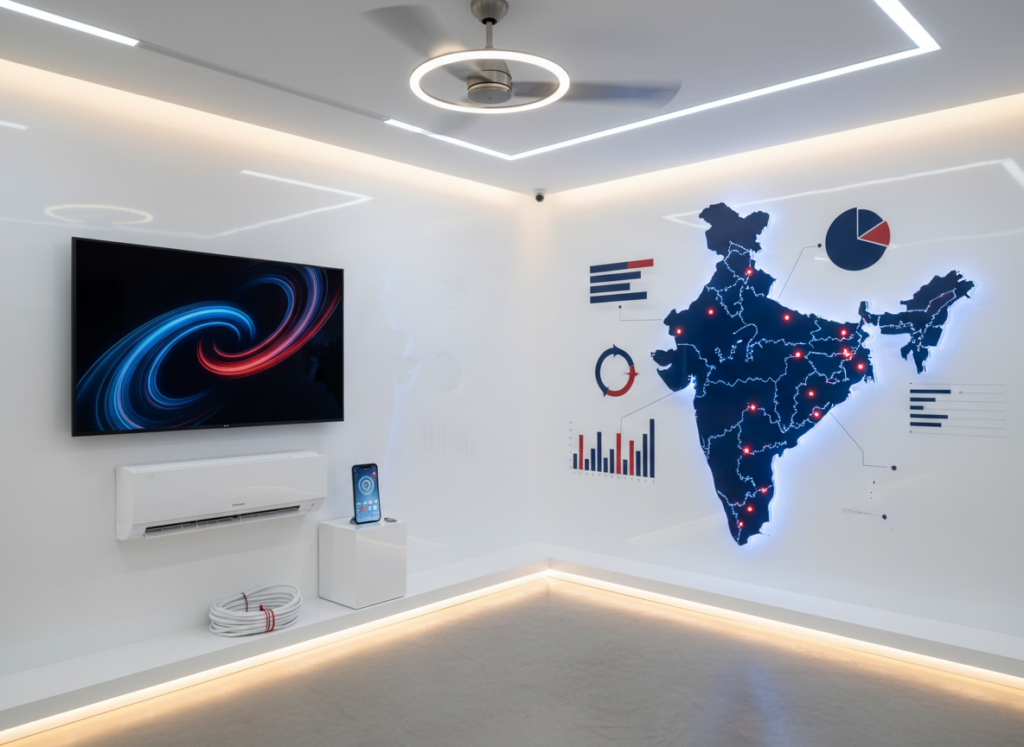
The market at a glance
Sources: IMARC Group, KPMG in India, consumer durables sector note, Business Standard, KPMG note citing PIB. Market-size figures are estimates from the publishers named.
Why this market is hard to read without research
The headline story is growth: rising incomes, more electrified homes, easier consumer finance and policy support for local manufacturing. The real story is uneven. In the same quarter, Havells reported strong growth in wires, cables, switchgear and lighting while fans and air coolers declined, because mild weather and extended rains cut appliance use, according to Business Standard. Weather, housing starts, festive timing, rural income and channel stock all move the numbers in different directions in different cities.
Four forces that decide who wins
Buyers are moving to inverter ACs, larger TVs, smart appliances and energy-rated products, but only where the price gap feels justified.
Exclusive stores, multi-brand dealers, large chains, e-commerce and quick commerce each serve a different buyer and each protects margin differently.
For wires, switches, lights and fans, the electrician or contractor often chooses the brand. Ignoring this group is a common mistake.
Installation, repair time and warranty handling decide repeat purchase and word of mouth in a market full of similar products.
Eight studies electronics and electrical brands commission
- Consumer purchase journey and brand tracking. Awareness, consideration, purchase and repurchase across cities and income groups.
- Price and feature testing. How much more buyers will pay for energy rating, smart features or a longer warranty.
- Retailer and dealer survey. Which brands dealers push, why, and what margin and support they expect. Read our dealer and distributor survey guide.
- Electrician, contractor and architect survey. The people who recommend wires, switches, lighting and fans, and what makes them switch brands.
- Retail audit and market mapping. Outlet-wise price, stock, shelf and brand share. See our guide to retail audit and market mapping, which works the same way for durables.
- Installation and after-sales mystery audit. Trained evaluators book a service call or visit a store as ordinary customers and score the experience. Read the complete guide to mystery audits.
- Customer satisfaction and NPS. Why customers recommend or complain, tracked after purchase and after service. See our CSAT and NPS guide.
- Feasibility and location study. Whether a new exclusive store, service centre or distributor in a given city will pay back. Read what a feasibility study covers.
Service-sector brands need the same discipline
Banks, hospitals, telecom, hotels, education, logistics and facility-management companies compete on experience, not on a product on a shelf. For them, ARS runs customer satisfaction surveys, mystery audits, location and feasibility studies and employee or partner research. The method is the same: ask the real customer, in the real city, before spending on the decision.
City-wise demand: where the sale really happens
Air conditioners sell earlier in Hyderabad, Chennai and Delhi than in Bengaluru or Pune. Fans and coolers move with the monsoon and the heat. Wires, switches and lighting follow new housing and renovation, which differ between Coimbatore, Ahmedabad, Pune and Lucknow. A single national plan hides all of this. City-level fieldwork shows where to place stock, which dealers to add and what to say in each market.
ARS Market Research Services runs field studies in these cities and the towns around them, with a capacity of 1,00,000+ sample in 15 days. Our directors personally supervise each study.
Related guides
- Luxury and Premium Car Market Research in India 2026
- India Auto Industry 2026: Record Sales and Key Trends
- B2B Market Research in India: A Practical Guide
- How Many Interviews Does Your Survey Need?
Official and industry sources: IBEF Consumer Durables | MeitY | Bureau of Energy Efficiency | Bureau of Indian Standards | PIB. Figures are as reported by the publishers named and may be revised. Company names appear only to describe public market data; they are not ARS clients and no endorsement is implied.